


Sri Bairavar Exportss is a government-recognized export company in Coimbatore, Tamil Nadu, specializing in Moringa products, Indian millets, herbal ingredients, natural sweeteners, coir products, and engineering goods. Established in 2012, we serve g...
- (+91) 7305640684
- mvkmarketing@gmail.com
- Sri Bairavar Exports No. 31, Ramasamy Thevar Street, Ramanathapuram, Near Ramanatha Puram Signal, , Coimbatore, Tamil Nadu, India. 641045
© 2020 SRI BAIRAVAR EXPORTSS. All Rights Reserved
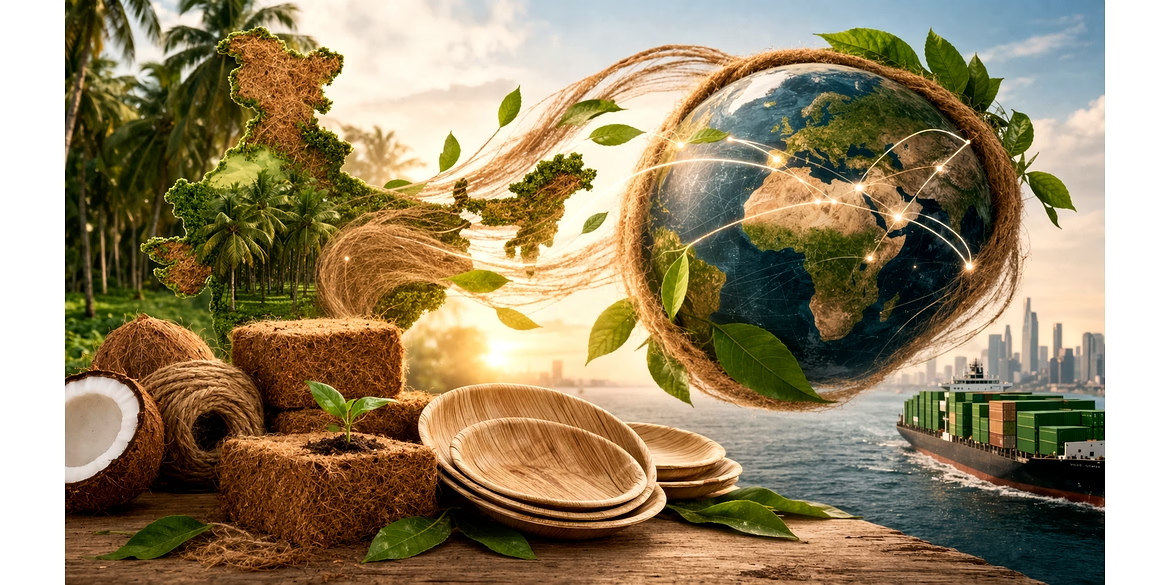

As global regulations tighten around plastic usage and sustainability standards, international buyers are increasingly shifting toward eco-friendly product sourcing from India. India is one of the world’s leading producers of biodegradable materials such as coir products, areca leaf plates, coconut fiber, and natural agricultural by-products.
For B2B importers, wholesalers, and distributors, sourcing sustainable products from India presents strong commercial opportunities across horticulture, food service, packaging, and green retail sectors. This guide explores the export potential, sourcing advantages, and business opportunities in eco-friendly product trade.
Why India Is a Global Hub for Eco-Friendly Products
India has abundant coconut cultivation, palm resources, and agricultural by-products that are naturally biodegradable. The country has built a strong export ecosystem for coir products, eco-based alternatives, and sustainable raw materials, making it a strategic sourcing destination for global buyers.
Key sourcing advantages include:
Large-scale coconut and areca cultivation
Competitive manufacturing costs
Established export infrastructure
Experienced merchant exporters
Strong government support for eco-product exports
India’s natural resource base, manufacturing ecosystem, and export capability make it an attractive source for companies seeking sustainable alternatives.
Coir pith blocks, also known as coco peat, and coconut fiber are widely used in greenhouse farming, hydroponics, soil conditioning, and erosion control. These coir products are among the most important categories in eco-friendly product sourcing from India because they combine commercial utility with strong environmental value.
Commercial applications include:
Hydroponic growing media
Soil amendment and conditioning
Greenhouse cultivation
Landscaping and erosion control
Organic farming inputs
Bulk coir exports are especially popular in Europe, the Middle East, and North America, where sustainable agriculture and water-efficient farming systems continue to expand.
Areca Leaf Plates – Sustainable Alternative to Plastic
Areca leaf plates are made from naturally fallen palm leaves and require no chemical processing. As more countries restrict or ban single-use plastics, global demand for biodegradable tableware has increased significantly. This makes areca products an attractive category for importers seeking eco-friendly alternatives with strong resale potential.
Areca products are commonly used in:
Catering services
Restaurants
Event management companies
Eco-conscious retail stores
Export distributors of disposable tableware
Their compostable and eco-friendly positioning makes areca leaf plates highly appealing in sustainability-focused food service, hospitality, and retail markets.
Coconut fiber and coir by-products are used across multiple industries including mattress manufacturing, rope production, packaging materials, horticulture, and geotextiles. These biodegradable raw materials are increasingly valued by international buyers looking to align procurement with sustainability goals and circular economy principles.
International buyers value these products for:
Durability and natural strength
Biodegradability
Sustainable sourcing profile
Cost-effectiveness
Long-term industrial applications
Coconut-based materials support the circular economy model increasingly adopted worldwide, making them a strong category for long-term B2B trade and sustainable product sourcing.
Market Trends Driving Eco-Product Demand
Global environmental policies, sustainability commitments, and changing consumer preferences are fueling growth in eco-friendly product imports. B2B buyers are increasingly under pressure to source products that align with environmental standards and responsible procurement strategies.
Major demand drivers include:
Plastic reduction regulations
ESG (Environmental, Social, Governance) commitments
Growth of organic agriculture
Sustainable packaging initiatives
Corporate sustainability policies
These market trends are creating strong import opportunities for wholesalers, private label brands, distributors, and institutional buyers focused on environmentally responsible products.
Importing eco-products from India requires proper export documentation, packaging standards, and destination-country compliance checks. Even sustainable products must meet commercial and regulatory requirements to avoid customs delays and supply chain disruptions.
Typical documentation includes:
Commercial Invoice
Packing List
Bill of Lading
Certificate of Origin
Phytosanitary certificate for agricultural products, if required
Buyers should confirm import standards, labeling rules, and any product testing requirements in their destination country before placing bulk orders.
Building Long-Term B2B Partnerships in Eco Trade
Eco-product sourcing is not just a one-time transaction. International distributors and importers benefit from establishing long-term supplier relationships that improve consistency, pricing stability, and operational efficiency. In sustainable trade, reliable supply partnerships are especially valuable because demand can increase rapidly as regulations and consumer expectations evolve.
Advantages of long-term partnerships include:
Stable pricing agreements
Consistent quality control
Flexible packaging options
Priority production scheduling
Reduced supply chain risk
India’s growing eco-product export sector offers strong potential for recurring bulk trade and strategic sourcing partnerships across multiple industries.
Eco-friendly products often carry premium positioning in retail and distribution markets. While bulk sourcing prices from India remain competitive, resale margins can be strong in sustainability-focused segments where buyers and end consumers are willing to pay more for biodegradable, compostable, and environmentally responsible products.
Key opportunities include:
Private labeling biodegradable tableware
Bulk horticulture supply distribution
Eco-retail brand partnerships
Online sustainable product marketplaces
Institutional supply contracts
International buyers can diversify their portfolios by adding eco-friendly products alongside agricultural imports, packaging supplies, and green retail categories.
Frequently Asked Questions (FAQ)
1. Why source eco-friendly products from India?
India offers abundant raw materials, competitive pricing, and established export infrastructure for sustainable and biodegradable products.
2. What are the most popular eco-products exported from India?
Coir pith blocks, coconut fiber, coir products, and areca leaf plates are among the most in-demand eco-friendly products exported from India.
3. Are areca leaf plates fully biodegradable?
Yes, areca leaf plates are 100% biodegradable and compostable, and they are produced without chemical processing.
4. What industries import coir products?
Horticulture, greenhouse farming, hydroponics, landscaping, erosion control, and soil conditioning industries commonly import coir products.
5. Do eco-products require special export documentation?
Yes, standard export documentation is required, and agricultural or plant-based products may also need phytosanitary certificates depending on the destination country.
6. Is eco-product demand growing globally?
Yes, sustainability policies, plastic reduction initiatives, and changing buyer preferences are driving increasing global demand.
7. Can eco-products be supplied in bulk for distributors?
Yes, bulk export shipments are common for international wholesalers, importers, and distributors sourcing eco-friendly products from India.