


Sri Bairavar Exportss is a government-recognized export company in Coimbatore, Tamil Nadu, specializing in Moringa products, Indian millets, herbal ingredients, natural sweeteners, coir products, and engineering goods. Established in 2012, we serve g...
- (+91) 7305640684
- mvkmarketing@gmail.com
- Sri Bairavar Exports No. 31, Ramasamy Thevar Street, Ramanathapuram, Near Ramanatha Puram Signal, , Coimbatore, Tamil Nadu, India. 641045
© 2020 SRI BAIRAVAR EXPORTSS. All Rights Reserved
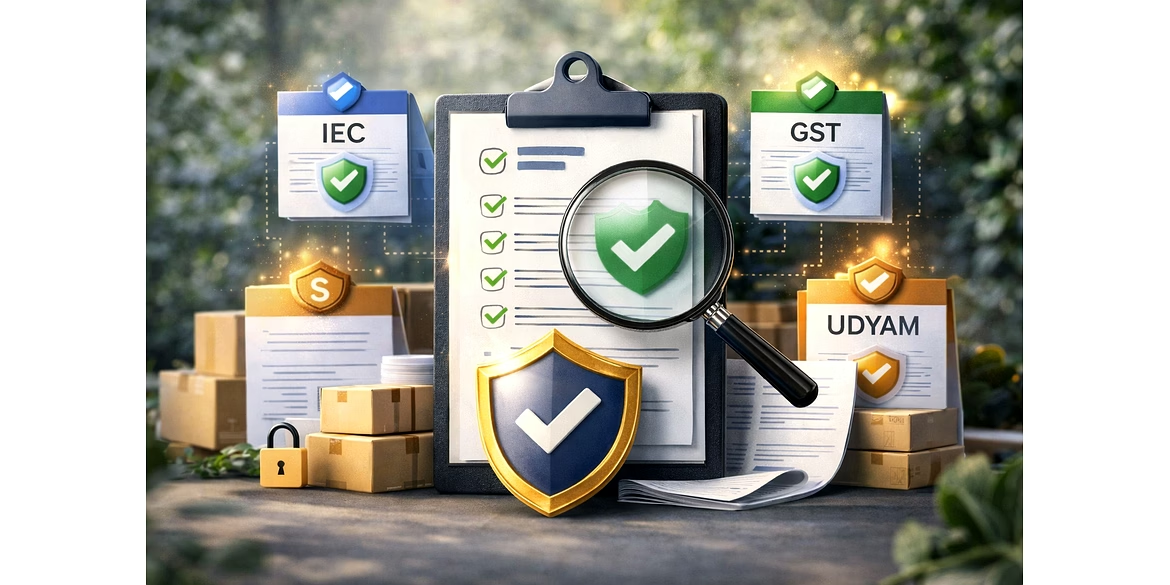

When importing products from India, verifying the legitimacy of an exporter is one of the most important steps for international buyers. Whether you are sourcing agricultural commodities, herbal ingredients, coir products, or engineering goods, proper exporter verification helps reduce trade risk, prevent delays, and support smooth customs clearance.
Indian exporters operate under specific government registrations, including the Import Export Code (IEC), GST registration, and UDYAM registration. Understanding these registrations helps global buyers assess supplier credibility, confirm export compliance, and build reliable B2B sourcing relationships. This guide explains how to verify an Indian exporter and what each registration means.
Why Verifying an Indian Exporter Is Important
International trade involves regulatory, financial, and quality risks. For overseas buyers, verifying an Indian exporter is a practical due diligence step that protects against fraud, shipment delays, customs issues, and compliance violations. A legitimate exporter should be able to provide accurate registration documents and consistent company details.
Benefits of proper exporter verification include reduced financial risk, confirmation of legal export authorization, better customs clearance efficiency, validation of government-recognized business status, and stronger long-term supplier relationships. This is especially important in bulk B2B transactions where order values, documentation accuracy, and supply chain reliability matter significantly.
The Import Export Code (IEC) is a mandatory license issued by the Directorate General of Foreign Trade (DGFT), Ministry of Commerce & Industry, Government of India. No Indian business can legally export goods without a valid IEC. For global buyers, checking the IEC is one of the first and most essential steps in Indian exporter verification.
Key facts about IEC include:
Mandatory for all exporters
Unique 10-digit code
Issued by DGFT
Required for customs clearance
Linked to the company’s PAN (tax ID)
How Buyers Can Verify IEC
Visit the official DGFT website, use the “View IEC Details” service, enter the IEC number and firm name, and confirm the registered address and status. If the information matches the exporter’s documents and business details, the IEC is likely valid and active.
What Is GST Registration?
GST registration confirms that a company is legally registered under India’s Goods and Services Tax system. It is required for conducting taxable business operations within India and is a key indicator of legal tax compliance. For international buyers, GST verification supports supplier legitimacy and helps confirm that invoicing and commercial documentation are handled by a recognized business entity.
Key points about GST registration include:
15-digit GSTIN number
Linked to business PAN
Indicates legal tax compliance
Required for invoicing and billing
Publicly verifiable online
How Buyers Can Verify GST
Visit the official GST portal, use the “Search Taxpayer” option, enter the GSTIN number, and verify the business name and registration status. An active GST status is a strong sign that the exporter is operating legally within India and maintaining basic tax compliance.
UDYAM registration is issued under India’s Micro, Small, and Medium Enterprises (MSME) framework. It identifies businesses officially recognized by the Government of India as micro, small, or medium enterprises. While UDYAM registration is not mandatory for export activity, it adds another layer of business credibility and transparency for B2B buyers.
Important aspects of UDYAM registration include:
Confirms enterprise classification
Provides government recognition
Indicates formal business structure
Shows operational legitimacy
Supports transparency
For overseas importers, UDYAM is useful when evaluating whether an exporter is a formally recognized MSME. It can strengthen supplier credibility, especially when combined with valid IEC and GST records.
What Is APEDA Registration for Agricultural Exporters?
If the exporter deals in agricultural or processed food products, they may also hold APEDA registration from the Agricultural and Processed Food Products Export Development Authority. This registration is especially relevant for buyers importing millets, jaggery, herbal products, spices, processed foods, and similar commodities from India.
APEDA registration can indicate:
Authorization to export agricultural products
Compliance with export regulations
Monthly export return reporting
Government oversight
For food and agriculture sourcing, checking APEDA registration alongside IEC, GST, and product-specific documentation can significantly improve supplier verification and reduce import risks.
Global buyers should remain cautious when an exporter’s business records appear inconsistent or incomplete. Registration verification is not just a formality; it is one of the most effective ways to identify potential risk before money changes hands.
Common red flags include:
IEC details do not match company information
GST status is inactive or cancelled
Business address is unclear or inconsistent
No official documentation is provided
Communication is inconsistent or evasive
Always request copies of certificates and verify them independently through official government portals. A genuine exporter should not hesitate to share registration details that can be publicly validated.
Additional Verification Steps for B2B Buyers
Beyond checking IEC, GST, UDYAM, and APEDA where applicable, experienced buyers usually perform additional supplier due diligence before finalizing a purchase order. These steps improve supply chain reliability and help avoid quality disputes or documentation issues later.
Additional verification steps include:
Request product samples
Conduct pre-shipment inspection
Verify warehouse or factory address
Review export documentation samples
Ask for client references where possible
Working with a verified Indian exporter improves more than trust. It also supports faster customs clearance, reduces documentation errors, strengthens legal protection, and enables reliable invoicing. Compliance-driven exporters are more likely to maintain consistent operations, respond professionally to buyer requirements, and build long-term business relationships.
For importers sourcing from India, exporter compliance is a critical part of risk management. Valid registrations such as IEC, GST, UDYAM, and APEDA where relevant provide useful signals that the supplier is operating within a recognized legal and regulatory framework.
Frequently Asked Questions (FAQ)
1. Is IEC mandatory for Indian exporters?
Yes, no Indian company can legally export goods without a valid Import Export Code (IEC).
2. Can IEC details be verified online?
Yes, IEC details can be verified through the official DGFT website using the exporter’s IEC number and firm details.
3. What does GST registration confirm?
GST registration confirms that the business is legally registered under India’s tax system and is operating as a recognized taxable entity.
4. Is UDYAM registration mandatory for exporters?
No, UDYAM registration is not mandatory for exporters, but it adds credibility by confirming MSME recognition.
5. What is APEDA registration used for?
APEDA registration authorizes exporters to trade agricultural and processed food products internationally and indicates regulatory oversight.
6. Should buyers verify all registrations before placing an order?
Yes, verifying IEC, GST, and other applicable registrations helps reduce trade risk and supports a safer sourcing decision.
7. What if an exporter refuses to provide registration details?
Buyers should exercise caution and avoid proceeding without proper verification, especially for high-value or bulk B2B transactions.