


Sri Bairavar Exportss is a government-recognized export company in Coimbatore, Tamil Nadu, specializing in Moringa products, Indian millets, herbal ingredients, natural sweeteners, coir products, and engineering goods. Established in 2012, we serve g...
- (+91) 7305640684
- mvkmarketing@gmail.com
- Sri Bairavar Exports No. 31, Ramasamy Thevar Street, Ramanathapuram, Near Ramanatha Puram Signal, , Coimbatore, Tamil Nadu, India. 641045
© 2020 SRI BAIRAVAR EXPORTSS. All Rights Reserved
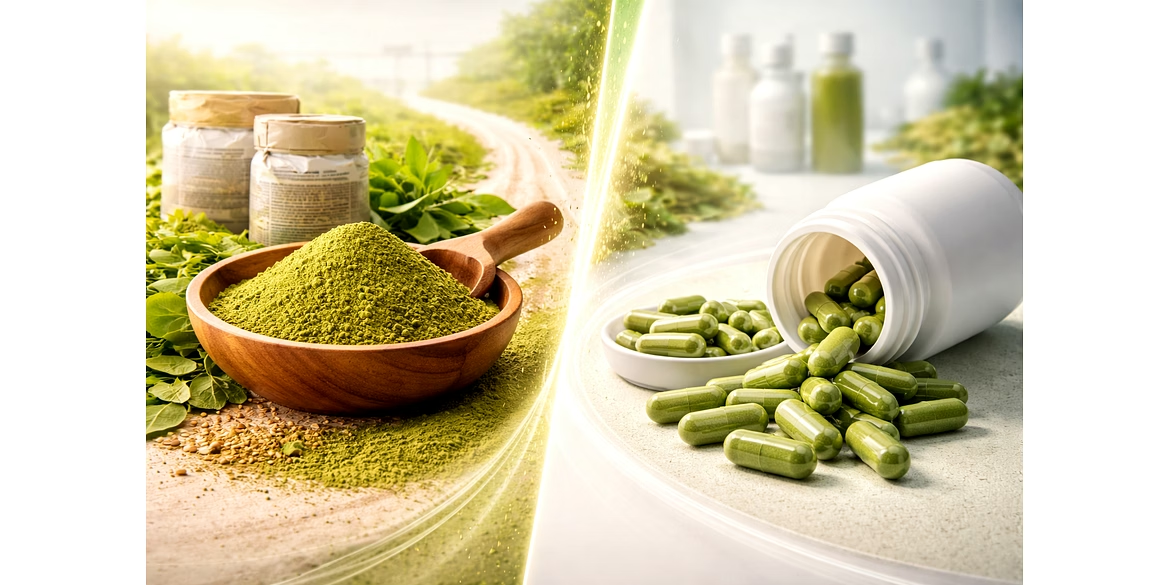

As global demand for plant-based superfoods continues to rise, Moringa Oleifera has become one of the most sought-after ingredients in the nutraceutical and wellness industry. International buyers, supplement companies, and private label brands often face a key sourcing decision: should you import Moringa Leaf Powder in bulk, or choose ready-to-sell Moringa Capsules?
Both formats offer strong market potential, but the right choice depends on your brand positioning, distribution model, regulatory environment, and production capabilities. This guide compares Moringa powder and Moringa capsules from a B2B sourcing and export perspective to help global buyers make informed decisions.
Understanding Moringa Leaf Powder in Bulk Supply
Moringa Leaf Powder is produced by drying and finely grinding Moringa leaves under hygienic processing standards. It is widely used as a raw ingredient in dietary supplements, functional foods, beverages, herbal blends, and wellness formulations. For international importers, bulk powder offers flexibility, formulation control, and long-term scalability.
Advantages of Moringa Leaf Powder include:
Ideal for private label capsule or tablet manufacturing
Suitable for blending into superfood mixes and protein powders
Lower cost per kg compared to finished capsules
Flexible packaging options such as bulk bags and drums
Easier to scale production for large brands
From a B2B perspective, Moringa powder is best suited for companies with in-house encapsulation facilities, contract manufacturers, or ingredient distribution channels.
Moringa Capsules are pre-measured supplement products made by encapsulating Moringa powder in vegetarian or gelatin capsules. These are ready for retail distribution and require minimal additional processing after import. For brands aiming for faster market entry, capsules can simplify product launch and sales operations.
Advantages of Moringa Capsules include:
Ready-to-market format
Consistent dosage per capsule
Attractive for retail consumers
Suitable for private label supplement brands
Faster product launch timeline
From a B2B standpoint, capsules reduce operational complexity, but they usually come with a higher per-unit cost because of added processing, encapsulation, packaging, and labeling requirements.
Cost Comparison: Powder vs Capsules
From a bulk export perspective, pricing structure differs significantly between Moringa powder and Moringa capsules. Buyers need to decide whether they want lower raw material costs with more downstream processing responsibility, or higher landed cost with a more market-ready product.
Moringa Powder
Lower processing cost
Higher flexibility in pricing strategy
Suitable for large-scale production
Reduced packaging complexity
Moringa Capsules
Higher processing and packaging cost
Higher retail margin potential
Ready for distribution
Requires labeling compliance
Importers must decide whether they want to position themselves as raw material distributors or finished supplement brands. This decision directly affects pricing strategy, margins, and operational responsibilities.
Different countries apply different regulations to raw ingredients and finished dietary supplements. This means Moringa powder and Moringa capsules may face very different import pathways, documentation requirements, and labeling obligations in the same destination market.
Powder Import
May require raw ingredient clearance
Easier for manufacturers and ingredient processors
Suitable for B2B supply chains
Capsule Import
May require dietary supplement registration
Requires labeling compliance
May be subject to stricter consumer safety regulations
Before importing either format, buyers should review destination-country compliance requirements carefully. This is especially important for supplement brands selling directly to consumers through retail or e-commerce channels.
Market Positioning: Ingredient Supplier vs Finished Brand
Your business model plays a central role in deciding whether Moringa Leaf Powder or Moringa Capsules are better for your brand. The right format depends on whether you serve other manufacturers, distribute finished supplements, or manage your own private label line.
Choose Moringa Powder if:
You supply raw ingredients to manufacturers
You operate a supplement production facility
You want flexible product formulation
You serve bulk ingredient distributors
Choose Moringa Capsules if:
You are launching a retail supplement brand
You want quick market entry
You distribute through pharmacies or e-commerce
You prefer ready-to-sell products
This brand positioning decision affects procurement, compliance, packaging, sales channels, and long-term margin strategy.
Working with a government-registered exporter supports smoother international trade operations and better documentation transparency. Export packaging, quality inspection coordination, and freight planning are especially important when shipping nutraceutical ingredients or finished supplements.
Reliable exporters typically provide:
Valid Import Export Code (IEC)
APEDA registration for agricultural products
GST compliance
Quality inspection coordination
International freight support
Bulk powder shipments often allow easier consolidation and more flexible packaging than finished supplement cartons.
Final Decision: Which Is Better for Your Brand?
There is no universal answer to the Moringa Leaf Powder vs Moringa Capsules decision. The better option depends on your production capabilities, brand positioning, regulatory environment, investment budget, and market distribution strategy.
Choose based on:
Production capabilities
Brand positioning
Regulatory environment
Investment budget
Market distribution strategy
For many global buyers, a practical approach is to start with bulk Moringa Leaf Powder to maintain flexibility and reduce initial costs, then move into private label capsules once demand, compliance readiness, and brand traction become more stable.
1. Is Moringa Leaf Powder cheaper than Moringa Capsules in bulk?
Yes, Moringa powder is generally more cost-effective because it involves less processing, encapsulation, and packaging than finished capsules.
2. Which format is better for private label brands?
Moringa Capsules are usually more suitable for private label brands that want ready-to-sell products and faster retail market entry.
3. Can I import Moringa powder and manufacture capsules locally?
Yes, many international buyers import bulk Moringa powder and encapsulate it locally through their own facilities or contract manufacturers.
4. Does capsule import require additional regulatory approvals?
In many countries, finished dietary supplements require more documentation, labeling compliance, and registration than raw ingredients.
5. What packaging options are available for bulk Moringa powder?
Bulk bags, food-grade liners, export-ready drums, and moisture-protected packaging are commonly used for international Moringa powder shipments.
6. Is Moringa Oleifera widely demanded in global markets?
Yes, demand for Moringa-based products continues to grow in nutraceutical, wellness, herbal, and functional food sectors worldwide.
7. How do I choose a reliable Moringa exporter from India?
Look for exporters with valid IEC registration, agricultural authority registration where relevant, GST compliance, documentation transparency, and consistent export experience.